Clothes and shoes should not end up in the bin. If we plan the seams from day one, taking things apart is faster, cleaner, and cheaper. Good end-of-life design is not magic. It is a list of small rules. Which stitch. What thread. Where to place tacks. How to mark pull starts. Follow the rules, and a product comes apart like a simple puzzle.
Start with the map
Make a disassembly map in your tech pack. It lists the order of removal and the tools needed. Upper first, then lining, then zip, then waistband, and so on. Mark each seam with a color code and a seam type. This map guides store teams, repair shops, and recycling partners. It also guides your own factory when they do warranty work.
Use stitches that release fast
- Chainstitch 401 on long joins you want to open later. One pull and the whole run can unzip. Leave a pull tail of 30 to 40 mm folded inside so a tool can grab it.
- Lockstitch 301 on areas that must stay secure in use, but keep length 3.0 to 3.5 mm so holes are not packed and unpicking is not slow.
- Coverstitch 406 for hems on knit garments. It lies flat in life and can be opened with a quick snip and a steady pull.
- Avoid dense bartacks where you plan to separate. Use two short wide tacks instead of one long hard bar. Width 3-4 mm. About 10-14 stitches.
Pick threads that fit the recycling route
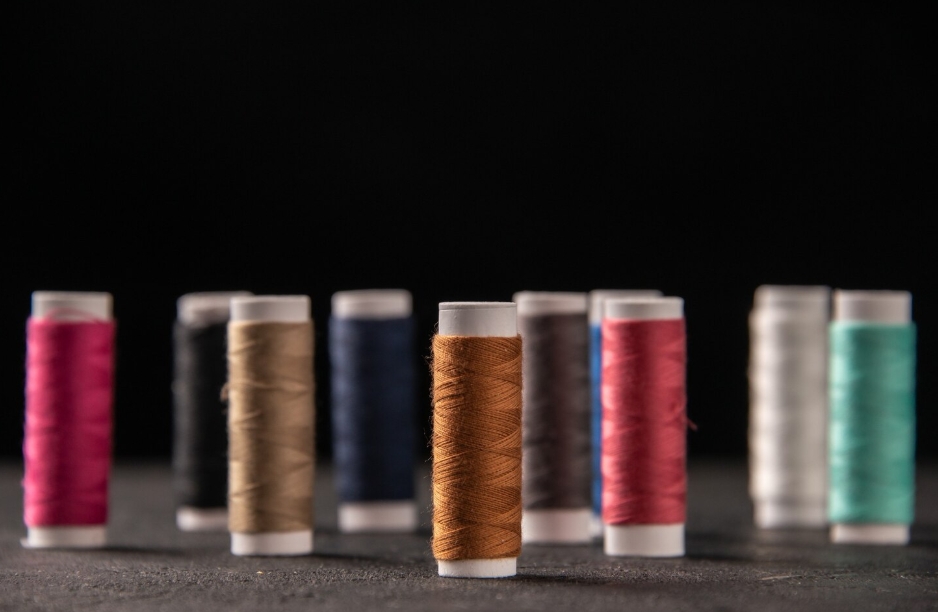
- Mono material thinking. In case the fabric is made of polyester, then use polyester sewing thread. Likewise, if it is cotton or lyocell, choose cotton or lyocell thread. The same family makes fiber recovery easier.
- Keep tickets light. The finest passing ticket reduces needle size and hole count. Lighter thread is faster to cut and less likely to snag on blades.
- Use anti-wick finishes only where water control matters. Else use simple low-friction finishes that do not block later processes.
- For temporary holding seams, you can use water-soluble tacking sewing machine thread inside allowances. It should not carry load in life. It only holds panel shape for bonding or top stitch. It will wash out at the recycler’s wet stage.
Color and marks that guide the hand
- Run contrast color thread on seams that must be opened first. It is easy to see and easy for vision systems to detect.
- Add a tiny triangle notch or printed icon at the pull start. The worker knows where to begin. Machines can find the symbol too.
- Use QR near the care label. Code links to the disassembly map and to the exact seam recipe. No guessing on the bench.
Place seams for clean cuts
- Keep release seams straight when possible. Straight lines are faster under a blade than tight curves.
- Round corners with 6 to 8 mm radius so stitches do not crowd. Crowded holes slow unpicking and make tears start.
- Move structural seams away from hard trims by 3 to 5 mm. A blade should not hit metal or thick plastic while following a seam.
Reduce glue and mix of chemistries
- Prefer sewing over full width bonding where disassembly is needed. If bonding is required, keep narrow film lanes 3 to 4 mm and place cut windows that allow a straight slice to release the bond.
- Match film chemistry to the fabric. PET to PET, PA to PA. Mixed chemistries slow down recycling steps.
Hardware choices that come off fast
- Use screwed or crimped parts only if they can be removed with one tool.
- Choose mono material trims when you can. A PET zip tape with PET coil is easier to process than mixed tape and metal.
- Place small release tabs under labels and patches. One snip and a pull takes them off.
Testing that proves the plan
- Bench release time
Give a tech two garments and a small tool kit. How long it take to remove the upper, lining, zip, and waistband? Target a short time. Document steps. - Single pull test on chainstitch
Start at the tail and pull. The seam should open without breaks for at least 30 cm. If it stops, lengthen the stitch or reduce the tension. - Cut path safety
Follow each release seam with a guarded blade. Ensure no metal hits the blade. Adjust seam offset if needed. - Material purity check
Sort the parts. Each pile should be one family. If mixed, change the thread or trim choices so the stream is clean.
Troubleshooting quick table
| Problem | Likely cause | Fast fix |
| Unpicking is slow | Dense SPI or short stitch | Lengthen to 3.0 to 3.5 mm, drop SPI by one |
| Chainstitch will not unzip | Tail missing or tension high | Add 30 to 40 mm pull tail, lower needle thread tension |
| Blade hits metal | Seam too close to hardware | Offset seam 3 to 5 mm, add release tab for the trim |
| Mixed fiber piles | Thread family mismatch | Match thread to fabric or move seam to be cut off fully |
| Glue fights release | Full width bond | Replace with 3 to 4 mm lanes and add cut windows |
Tech pack lines you can copy
- Disassembly order: collar label, zip, waistband, side seams, hem
- Release seams: 401 chainstitch with 35 mm pull tail, length 3.2 mm
- Secure seams: 301 lockstitch, length 3.2 mm, short wide tacks only
- Thread family: match garment fiber. PET on PET, cotton on cotton
- Color code: release seams in contrast color C-07, all others tone on tone
- Bonding: narrow lanes 3 mm with cut windows every 50 mm
- QR: link to map and tool list
One week pilot plan
Day 1 pick one woven and one knit style.
Day 2 add release seams and contrast thread per spec.
Day 3 train two people for 20 minutes on the map.
Day 4 time the bench tear down. Change stitch length or offsets where slow.
Day 5 test chainstitch unzip and cut path safety.
Day 6 send parts to your recycler for feedback on purity.
Day 7 freeze the spec and roll to the next three styles.
Wrap
End of life planning starts with the seam. Choose stitches that open, threads that match the fiber, and paths that a blade can follow. Mark pull starts. Keep glue narrow. Keep hardware friendly. Test the time, not only the lab strength. With these small choices, your take back program runs faster, costs less, and creates cleaner material for the next product.